The Quiet Power of Independent Thinking: How Embracing Solitude Unlocks Amazing Creativity
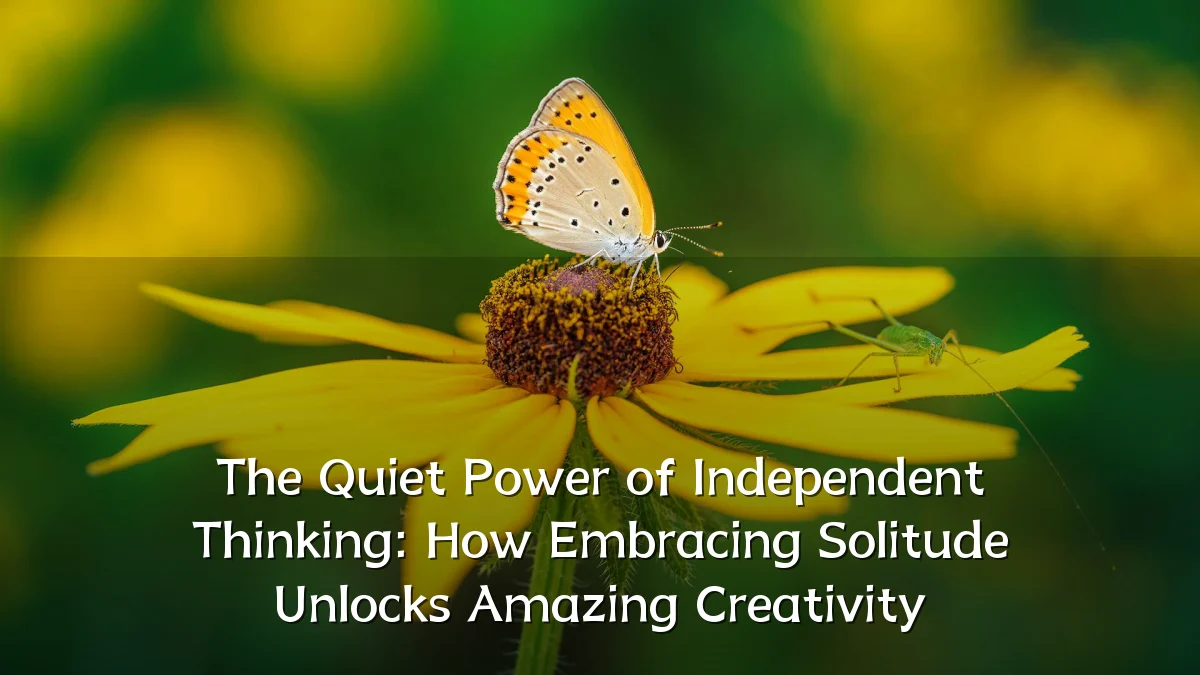
In an era defined by constant connectivity and collaborative workflows, a quiet countercurrent is gaining attention. Observers across creative industries are noting a renewed focus on deliberate solitude as a catalyst for original thought. This analysis examines the forces behind this shift and what it suggests about the relationship between isolation and innovation.
Recent Trends
Several workplace and social patterns have converged to rekindle interest in independent thinking:

- Rise of remote and hybrid work models, which often reduce spontaneous collaborative noise and increase individual autonomy.
- Growing research into attention economics, with many professionals reporting that constant notification streams degrade deep cognitive work.
- Proliferation of digital “quiet hours” and company policies that encourage focused, uninterrupted blocks of time.
- Increased public discussion by artists, scientists, and entrepreneurs who credit periods of solitude with breakthrough ideas.
Background
The concept of solitude as a creative engine is hardly new—philosophers and inventors have long sought withdrawal for clarity. However, the modern emphasis on brainstorming, agile teams, and open offices temporarily overshadowed that tradition. Today, many experts argue that true creativity requires both incubation and deliberate separation from groupthink. In academic psychology, studies have long linked independent problem-solving to the ability to resist social conformity, while cultural historians note that many classic works emerged from reclusive periods.

User Concerns
Despite the potential benefits, embracing solitude raises practical and emotional concerns:
- Fear of missing out (FOMO) on collaborative opportunities or team alignment.
- Difficulty distinguishing productive solitude from harmful isolation or burnout.
- Challenge of maintaining social and professional connections while carving out independent thinking time.
- Uncertainty about how to structure solitary work effectively—without clear metrics, some feel unproductive.
“The line between meaningful solitude and loneliness is thin,” one organizational psychologist notes. “The goal isn’t to disengage from the world, but to create conditions for original synthesis.”
Likely Impact
If current trends hold, the implications for both individuals and organizations are notable:
- Workplace design may shift toward more soundproof pods and quiet zones alongside collaborative spaces.
- Educational curricula could incorporate structured independent projects to balance group work.
- Creative industries may begin measuring output quality over collaboration frequency.
- Personal productivity advice will likely focus more on attention management than time management.
What to Watch Next
Several developments will indicate how deeply this movement takes root:
- Changes in corporate policies around mandatory meeting attendance and availability expectations.
- New software tools designed to protect deep work rather than enable multitasking.
- Long-term studies comparing creative output of individuals in solitude-rich vs. collaboration-heavy environments.
- Cultural narratives around introversion and independent thinking—will they shift from labeling to normalizing?
As the pendulum swings away from constant connectivity, the quiet practice of independent thinking may prove not only relevant but essential for unlocking the next wave of genuine innovation.