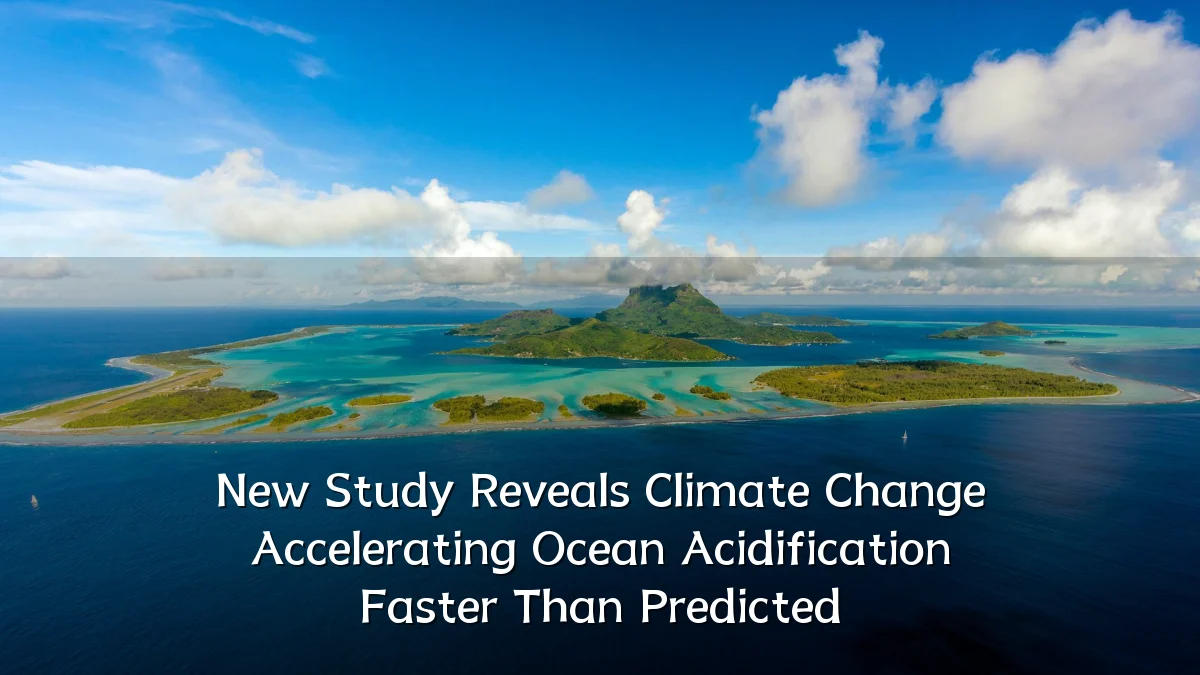
New Study Reveals Climate Change Accelerating Ocean Acidification Faster Than Predicted
Recent Trends
An international research collaboration has released findings indicating that ocean acidification rates are outpacing earlier model projections. Over the past several years, monitoring stations in key regions—including the Southern Ocean, the Arctic, and tropical coral zones—have recorded a steady decline in average pH levels. The study consolidates data from multiple ocean-observing networks and reports that the rate of change has increased notably since the early 2000s.
- pH decline in surface waters is occurring at a pace roughly 30–40% faster than IPCC baseline scenarios from the previous decade.
- Seasonal variability in carbon absorption has widened, creating more frequent acute acidification events in coastal upwelling zones.
- High-latitude regions are experiencing the most rapid shifts, with some areas already crossing thresholds previously expected only by mid-century.
Background
Ocean acidification results from the uptake of atmospheric carbon dioxide (CO₂) by seawater, which forms carbonic acid and reduces the availability of carbonate ions—a critical building block for marine calcifiers like corals, mollusks, and plankton. For decades, scientists modeled this process as a gradual, linear response to rising CO₂ emissions. The new study challenges that assumption, suggesting that feedback loops—such as warming-induced changes in ocean circulation and reduced buffering capacity in waters already high in carbon—are amplifying the chemical reaction.

“We are observing a non‑linear acceleration that was not captured in earlier global models,” the lead author noted in a research briefing. “This means some ecosystems may reach critical thresholds sooner than we had prepared for.”
The study relies on a combination of direct seawater sampling, satellite-derived carbon flux data, and improved biogeochemical models that account for regional variations in temperature and salinity.
User Concerns
For stakeholders dependent on marine resources, the findings raise practical questions about timing and adaptation. Key concerns include:
- Shellfish fisheries: Hatcheries in the Pacific Northwest have already reported larval mortality events linked to corrosive waters. The acceleration suggests such disruptions could become annual rather than episodic within a decade.
- Coral reef tourism: Warm‑water reefs may lose structural integrity earlier than previously assumed, affecting both biodiversity and local economies.
- Food security: Coastal communities that rely on calcifying shellfish as a protein source face uncertain harvest windows and may need alternative livelihood pathways sooner.
- Insurance and investment: Marine‑based industries (aquaculture, shipping, coastal real estate) may need to reassess risk horizons for assets exposed to acidification‑driven ecosystem changes.
Likely Impact
The near‑term effects will vary by geography and ecosystem type. Researchers emphasize that the pace of change is not uniform. Key expected consequences include:
- Reduced calcification rates among shell‑building organisms, potentially leading to thinner shells and higher mortality in juvenile stages.
- Shifts in plankton community composition that could alter the base of the marine food web, affecting everything from small fish to whales.
- Increased vulnerability of cold‑water corals in deep‑sea canyons, which already experience low carbonate saturation and may lose habitat rapidly.
- Economic ripple effects: The study estimates that adaptation costs for major shellfish industries could rise significantly within a 10–15 year window if current trends continue.
On a positive note, the study also identifies localized “refugia”—areas with stronger buffering capacity or slower acidification rates—that could serve as priority zones for conservation and managed harvesting.
What to Watch Next
Several developments will determine how policymakers, industry, and communities respond to the accelerating acidification signal:
- Updated emissions scenarios: Whether global CO₂ reduction pledges translate into actual declines in atmospheric concentration will be the single largest lever.
- Regional monitoring expansion: Efforts to install new pH sensors in under‑surveyed areas (e.g., the Indian Ocean and polar margins) will help confirm or refine the acceleration pattern.
- Adaptation research funding: Look for increased investment in selective breeding of resilient shellfish strains and in artificial upwelling or alkalinity enhancement trials.
- Policy integration: Ocean acidification may become a more explicit target in national climate adaptation plans, potentially influencing marine protected area design and fisheries quotas.
- Cross‑study validation: Upcoming coordinated field campaigns by the Global Ocean Acidification Observing Network will test whether the acceleration holds during a full solar cycle and across varying ENSO states.
The study authors stress that while the findings are sobering, they also provide a clearer baseline for action—reducing carbon emissions remains the only long‑term solution, but shorter‑term interventions can still mitigate the worst local impacts if deployed soon.